What the anion gap Indicates
The anion gap is a useful way to interpret serum electrolytes during a metabolic workup. It helps clinicians estimate the balance between measured cations and measured anions in the blood, using values such as sodium, chloride, and serum bicarbonate. Because routine chemistry panels do not directly measure every charged particle in the bloodstream, the anion gap functions as a useful proxy for identifying unmeasured anions and guiding clinical interpretation.
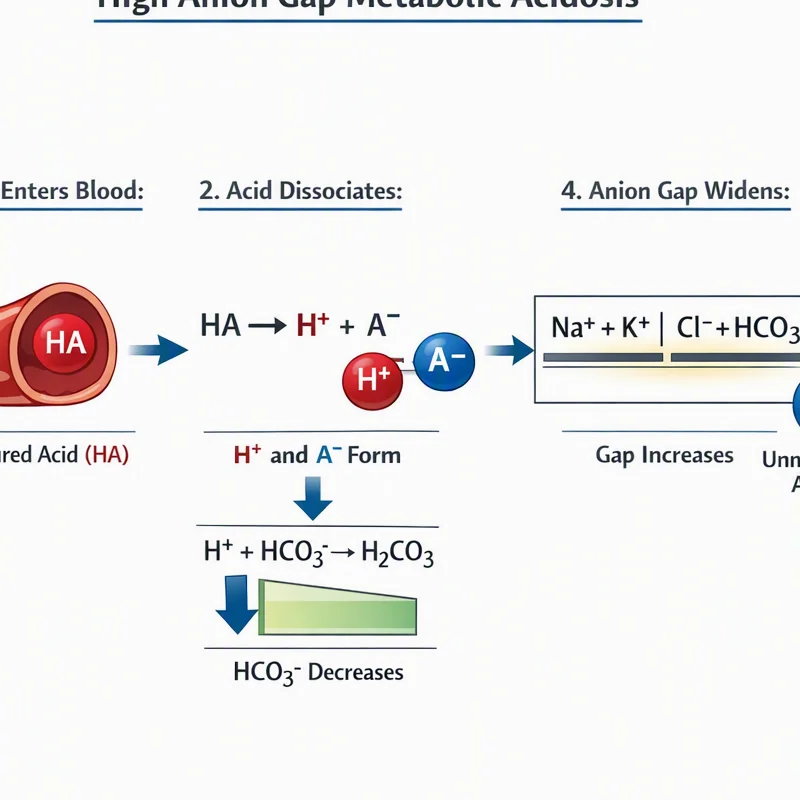
In simple terms, the anion gap is a clue about acid-base balance. When the gap is elevated, it often suggests a metabolic acidosis driven by acids that are not represented on the standard electrolyte panel. When the gap is normal, the issue may be a loss of bicarbonate with a compensatory rise in chloride, creating a pattern more consistent with normal anion gap acidosis. That distinction is central to a careful diagnostic algorithm.
Although the term “gap” can sound abstract, the calculation is grounded in everyday serum chemistry. A rise or fall in the anion gap is not a diagnosis by itself; rather, it is a diagnostic tool that refines the differential diagnosis and helps determine whether the next step should focus on lactate, ketones, toxin exposure, renal causes, or gastrointestinal bicarbonate loss.
Because the calculation depends on routine lab values, it is especially helpful in busy settings where quick recognition of electrolyte abnormalities matters. Used correctly, the anion gap supports a systematic evaluation instead of isolated interpretation of one abnormal result.
How to Use an Anion Gap Calculator
An Anion Gap Calculator simplifies the anion gap calculation by entering the primary laboratory inputs, typically serum sodium, serum chloride, and serum bicarbonate. Some calculators also allow entry of potassium and serum albumin so the result can be adjusted for albumin correction. This can be especially useful when the goal is a more precise corrected anion gap rather than a raw estimate alone.
The calculator is best seen as part of a broader diagnostic algorithm. It does not replace the clinician’s judgment, but it reduces arithmetic errors and keeps the focus on clinical interpretation. After entering the values, review whether the result falls within the expected reference range and whether the number fits the patient’s symptoms, blood gas findings, and overall pattern of acid-base balance.
To use the calculator effectively in a metabolic workup:
- Confirm that the electrolyte panel is current and internally consistent. Enter the available serum sodium, serum chloride, and serum bicarbonate values. Add potassium if the calculator includes it and your workflow uses that version of the formula. Check serum albumin so the calculator can estimate a corrected anion gap when needed. Weigh the output with the clinical picture, including metabolic acidosis symptoms, blood pressure, respiratory status, and medication history.
In practice, the calculator helps separate whether an abnormal result likely reflects a true accumulation of acids or a change masked by low albumin. That distinction matters because albumin is a major unmeasured anion, and changes in its concentration can alter interpretation even when the chemistry panel appears straightforward.
Anion Gap Formula and Common Variations
The standard anion gap formula is:
anion gap = sodium − (chloride + bicarbonate)
Some versions include potassium:
anion gap = sodium + potassium − (chloride + bicarbonate)
Each method are used in healthcare settings, but the potassium-inclusive version is less common in standard reporting because potassium is usually present in much lesser amount than sodium. Whether potassium is included or not, the goal is the same: to estimate the difference between measured cation levels and measured negative ions and infer the presence of unmeasured anions.
Understanding the expected normal anion gap is important before labeling a result abnormal. The reference range depends on the laboratory method, analyzer, and whether potassium is included. For that reason, the number should always be interpreted in the context of the local lab’s serum chemistry standards rather than compared casually across facilities.
The delta gap is another important variation used in acid-base evaluation. It compares the rise in anion gap with the fall in bicarbonate and helps identify mixed disorders. For example, a disproportionately large change may suggest that multiple metabolic process is occurring at once. This is especially helpful when the lab pattern is not fully explained by a single cause of metabolic acidosis.
In other words, the formula provides the initial step, but the interpretive value comes from pattern recognition. A number that is slightly abnormal may be of lower concern than a result that is clearly discordant with the expected compensation, chloride shift, or degree of bicarbonate deficit.
Interpreting a Elevated Anion Gap in Metabolic Workup
A increased anion gap usually suggests that acidic compounds or other undetected anions are building up. This pattern is highly suggestive of acid-base imbalance and requires prompt clinical review in the context of symptoms, vital signs, and the full chemistry profile. The most common main concerns in the differential are elevated lactate acidosis, ketotic acidosis, and toxic alcohol ingestion.
Lactate-related acidosis should be considered when tissue hypoperfusion, sepsis, hypoxia, or severe exertion is present. Because lactate is an unmeasured anion in standard panels, it can drive the gap higher even before other abnormalities become obvious. A measured lactic acid level helps support the suspicion and can be followed serially to assess clinical improvement.
Ketone-related acidosis is another major cause of a increased anion gap. It may occur with diabetes, prolonged fasting, or alcohol use. In these cases, ketone bodies contribute to acid accumulation and lower bicarbonate. The pattern may appear dramatic on the chemistry panel, but the diagnosis should still be supported by glucose, ketone testing, blood gas analysis, and history.
Alcohol toxin ingestion is a critical diagnosis not to miss. Substances such as methanol or ethylene glycol can present with elevated anion gap acidosis and neurologic or visual symptoms. Because these toxins can produce early nonspecific findings, the anion gap often serves as a first warning signal in the metabolic evaluation. If the story suggests exposure, additional testing should be pursued urgently.
It is also important to remember that a high anion gap does not automatically prove a single cause. A patient may have concurrent volume depletion, respiratory compensation, or another process altering the final laboratory picture. That is why the result should be tied to the broader diagnostic framework approach rather than interpreted in isolation.
Reasons of a Standard Anion Gap Acidosis
A normal anion gap acidosis is often called hyperchloremic acidosis because chloride rises as bicarbonate falls, keeping the measured gap relatively stable. This pattern reflects a true acid-base problem even though the gap remains within the expected range. The most common mechanism is bicarbonate loss or impaired renal acid handling.
Gastrointestinal losses is a classic cause because the gastrointestinal tract can lose substantial bicarbonate. When this occurs, the body often compensates by retaining chloride, creating the typical laboratory pattern of chloride-associated acidosis. The result may look less dramatic than a high-gap disorder, but the clinical impact can still be significant.
Tubular renal acidosis is another key cause of typical anion gap acidosis. In this group of disorders, the kidneys fail to acidify urine properly or reabsorb bicarbonate effectively, leading to persistent acid-base imbalance. Careful review of urine studies, potassium, and kidney function may help distinguish the specific subtype.
Other causes of bicarbonate loss or chloride gain can also produce this pattern. Because the laboratory appearance may be subtle, it is important not to stop the evaluation after seeing a “normal” gap. The term normal refers to the calculation, not necessarily to the patient’s physiology.
In practice, the key question is whether the pattern supports a renal source, a gastrointestinal source, or a medication-related effect. A thoughtful medical interpretation of the electrolyte pattern helps separate these possibilities and keeps the diagnostic workup focused.
Protein Compensation and Its Importance
Hypoalbuminemia can substantially distort the reported anion gap because serum albumin is a important unmeasured anion. When albumin is low, the measured gap may appear deceptively normal or only mildly elevated, even when a true acid load is present. This is why albumin correction is so important in many hospitalized or chronically ill patients.
The corrected anion gap modifies the raw calculation to account for low serum albumin. While formula details vary by institution, the principle is consistent: low albumin lowers the apparent gap, so the corrected value may uncover hidden metabolic acidosis. This can affect clinical interpretation and prevent missed diagnoses such as lactic acidosis or toxic exposure.
Albumin adjustment is particularly useful when the chemistry panel looks discordant with the clinical picture. If a patient looks acidotic but the gap is not elevated, low albumin may be masking the abnormality. The corrected result can bring the interpretation back into alignment with the patient’s status.
For that reason, an accurate Anion Gap Calculator should ideally include a field for albumin. The calculator is not just a convenience feature; it improves the accuracy of acid-base evaluation by helping clinicians see the effect of low protein on the final number.
Systematic Metabolic Assessment After Measuring the Gap
Once the anion gap is determined, the subsequent step is a structured metabolic workup. The value should guide testing rather than end it. A logical sequence usually starts with confirmation of the chemistry profile and then moves into focused studies based on whether the gap is increased, within normal range, or corrected otherwise after albumin correction.
A practical stepwise approach includes:
- Check the basic metabolic panel for sodium, chloride, bicarbonate, creatinine, and glucose. Obtain an arterial blood gas or additional blood gas analysis when acid-base status is uncertain or respiratory compensation needs confirmation. Measure lactate if perfusion problems, sepsis, or shock are suspected. Perform ketone testing when ketoacidosis is suspected. Evaluate the osmolar gap if toxin exposure or toxic alcohol ingestion is possible.
The osmolar gap is especially useful after an unexpectedly elevated anion gap because it may point toward unmeasured solutes such as alcohols. A high osmolar gap does not prove poisoning, but it strengthens the case for further toxicology evaluation. When paired with the anion gap, it helps refine the diagnosis and guide urgent treatment.
Blood gas analysis adds context by showing pH and respiratory compensation. If the bicarbonate is low but pH is near normal, the patient may have mixed abnormalities or effective respiratory compensation. This is where the broader diagnostic algorithm becomes essential, because the chemistry panel alone cannot fully define the disorder.
In short, the calculator should be the starting point of the workup, not the end. Its purpose is to organize the next questions: Is this a high-gap process? Is albumin masking the severity? Is there evidence of lactate elevation, ketones, or toxins? Those answers shape management.
Constraints, Pitfalls, and Medical Context
Although a well-designed Anion Gap Calculator has constraints. A common problem is laboratory error, including specimen handling problems, analyzer variation, or transcription mistakes. A surprising result should always prompt a quick review of the source data before anchoring on a diagnosis.
Another limitation is the reference range itself. Different laboratories may report slightly different normal values because of assay method and instrument calibration. As a result the same numbers can be interpreted differently depending on the institution. Clinical judgment should always be applied to the local standard rather than an assumed universal cutoff.
The anion gap also has reduced specificity in complex acid-base disorders. A patient may have chronic kidney disease, vomiting, respiratory changes, or medication effects that alter the expected picture. In those settings, mixed disorders can hide or mimic a primary metabolic process. The delta gap and blood gas analysis help uncover these patterns, but they are still interpretive tools, not definitive answers on their own.
Interpretation depends on more than the numbers. If the clinical picture suggests shock, infection, drug exposure, or severe dehydration, a normal or borderline result does not fully exclude disease. Likewise, a mild elevation should not be overcalled as a major toxin exposure without supporting evidence. Good clinical interpretation combines the calculator output with symptoms, history, and confirmatory testing.
Finally, remember that the anion gap is a tool for pattern recognition, not a substitute for complete assessment. It should be used as part of a broader systematic evaluation of the patient’s acid-base balance and overall metabolic state.
Frequently Asked Questions
What is the Anion Gap Calculator used for in a metabolic workup?
The Anion Gap Calculator is used to interpret serum chemistry results and identify patterns that suggest metabolic acidosis. It helps distinguish high anion gap conditions, such as lactic acidosis or ketoacidosis, from normal anion gap disorders like hyperchloremic acidosis. In a metabolic workup, it guides the next diagnostic steps.
How can you determine the anion gap from sodium, chloride, and bicarbonate?
The standard anion gap formula is sodium less the total of chloride and bicarbonate: anion gap = sodium − (chloride + bicarbonate). Some versions also include potassium. An Anion Gap Calculator does this anion gap calculation automatically and can also apply albumin correction when needed.
Why does low albumin affect the anion gap?
Serum albumin is a key uncounted anion. When albumin is low, the measured gap may appear falsely normal or only mildly elevated. That is why hypoalbuminemia can hide a true acid-base problem and why a corrected anion gap is often more informative for clinical interpretation.
What conditions cause a high anion gap metabolic acidosis?
Frequent causes of high anion gap metabolic acidosis comprise lactic acidosis, ketosis-related acidosis, and toxic alcohol ingestion. Further causes exist, but these are among the key to review during a systematic evaluation because they may require immediate treatment.
When should an osmolar gap be checked after an elevated anion gap?
An osmolar gap should be https://anion-gap-checker148.lowescouponn.com/how-chloride-alters-the-anion-gap checked when an elevated anion gap raises concern for unmeasured toxins, especially if toxic alcohol ingestion is possible. It is also useful when the presentation is unclear and a broader metabolic workup is needed to distinguish toxin-related acidosis from other causes.